WORLD / A WORLD OF DISCOVERY
There are6,239recognized mineral species worldwide.
IMA-VALID MINERAL SPECIES
And there are minerals still waiting to be discovered.
Go in search of stones you have yet to meet.
Glass And Stone is a world designed to grow, little by little, toward the mineral diversity of the real Earth. The First 72 was never the finish line.
Source: valid mineral species in the official IMA-CNMNC list. A global count, not the number of minerals in the game.
About the sourcesThe surrounding stones are decorative mineral imagery.
01A NAME GIVEN BY GEOLOGISTS
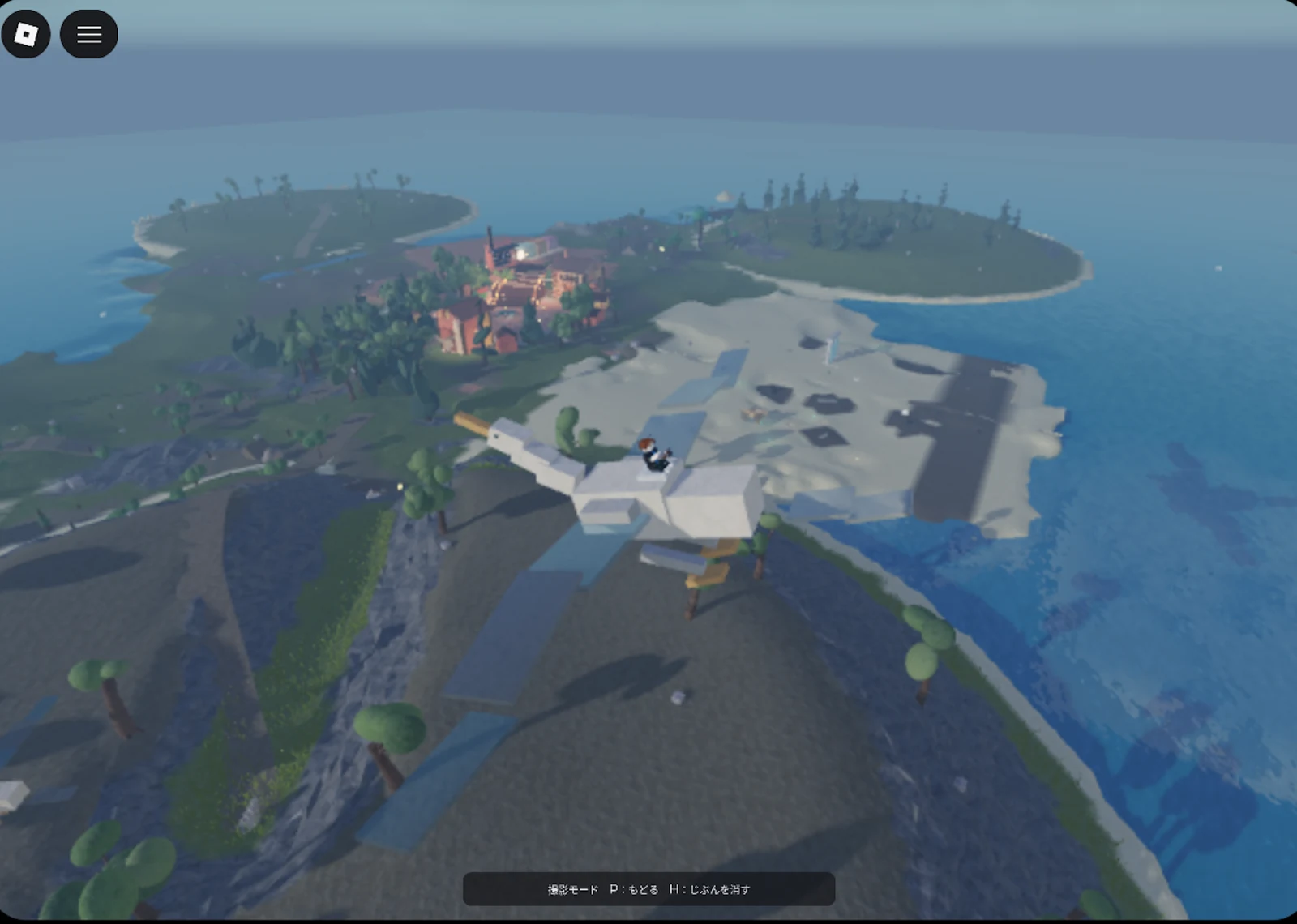
The Deep Time Archipelago
The Deep Time Archipelago is not the formal name of these islands.
It is a nickname that gradually took hold among mineralogists, geologists and collectors because an extraordinary range of geology and minerals can be found across the archipelago. In Japanese, they call it 深時諸島(みときしょとう / Mitoki Shoto).
The islands may be named differently by local people, old charts and researchers. On this WORLD page, we use the geologists’ nickname because it best describes what makes this place unusual.
02BETWEEN SCIENCE AND IMAGINATION
An imagined world, grounded in real geology.
Glass And Stone is a fictional world built on real geological ideas.
Across these islands, environments that would normally be separated by continents and immense spans of geological time exist across neighboring seas: ancient crust, metamorphic belts, volcanic arcs, granite intrusions, pegmatites, hydrothermal systems, limestone terrains, evaporite basins, ultramafic rocks and deep-sea environments.
That is the great imaginative premise of the world.
But the stones themselves should remain as grounded as possible. Mineral habit, host rock, occurrence, formation environment and rarity are guided by the real Earth.
We check mineral names and species status against the official IMA-CNMNC list. For properties and formation environments, we consult research papers, museum records and scientific references, keeping real knowledge distinct from the island’s fiction.
Walk through a fantasy world, and touch 4.6 billion years of real Earth history.
The islands’ geography and geological history are fictional. Collecting, analysis and making include simplified processes and timescales for play. These are our development principles, not a claim that every record and image has already been verified.
Be faithful to real stones.03WHY “DEEP TIME”
Deep Time — imagining 4.6 billion years
Deep Time is a way of thinking about the immense scale of Earth history — a scale far beyond ordinary human experience.
If Earth’s roughly 4.56-billion-year history were compressed into a single 24-hour day:
| Clock | Earth history |
|---|---|
| 00:00 | Earth forms |
| 05:35approximately | early evidence of life (~3.5 billion years ago) |
| 17:41approximately | more complex multicellular life appears (~1.2 billion years ago) |
| 22:47approximately | the earliest dinosaurs appear (~230 million years ago) |
| 23:39approximately | non-avian dinosaurs go extinct (66 million years ago) |
| 23:59:54approximately | Homo sapiens appears (~300,000 years ago) |
| 23:59:59.9approximately | roughly 5,000 years of recorded human history |
Our species arrives only about six seconds before midnight.
Rocks carry evidence of volcanoes, oceans, mountain building, hydrothermal fluids, pressure and erosion from far earlier moments in that day.
That is why geologists came to call these islands the Deep Time Archipelago.
The times are illustrative conversions using representative ages, not a formal scientific timescale.
04AONAGI ISLAND · SEASON 1
Aonagi Island
Glass And Stone begins on Aonagi Island.
Beneath its calm blue sea lies a violent geological history. An ancient metamorphic basement was followed by volcanic activity, granite intrusion, pegmatite formation and hydrothermal mineralization. Later uplift, weathering, rivers and waves exposed and redistributed the rocks.
That is why different parts of the same island tell different geological stories.
05WHY THESE STONES ARE HERE
Why these stones are here
Coast — ordinary water-worn rocks, often with nothing rare inside.
River — a natural conveyor carrying stones from geological zones upstream.
Mountain & Cave — metamorphic rocks, granite, pegmatite and mineral veins.
Abandoned Mine — traces of veins once followed by people, with clearer mineralization.
06DISCOVERY
From finding to knowing.
A stone does not always tell you its name when you pick it up.
- FIND
- WASH
- BREAK
- OBSERVE
- IDENTIFY
A gray rock may reveal a vein after washing. A fracture may expose a crystal. A loupe, microscope or research instrument may be needed before its identity becomes clear.
Some clues can be seen; others require analysis. Appearance alone cannot identify every mineral. Identification in the game is a simplified representation of that process.
This is not a 6,000-item lottery. Geological knowledge should help you search.
07RARITY
Rarity has more than one meaning.
Species Rarity and Specimen Quality are different.
SPECIES RARITY How rare a mineral species is on the real Earth. How often you encounter it on the island also depends on the local geological setting.
SPECIMEN QUALITY How special an individual find is in its size, crystal form, exposure and preservation.
Quartz may be common as a species while a particular quartz specimen can be exceptional. A globally rare mineral may be visually modest.
Rare / Very Rare / Exceptional discoveries should be a doorway into learning why a find matters, not only a reward animation.
What is rare on Earth should be rare on the island: this guides our design. Rarity tiers and encounter rates are game interpretations informed by occurrence data, not official IMA ratings or measured real-world collecting probabilities.
08VALUE
Value is not one thing.
Glass And Stone does not reduce a stone or work to one number.
Species rarity, specimen quality, provenance, personal memory, artistic appeal and market price can all be different.
A stone you find may be kept, displayed, sold, or made into a glass work. Enjoy its natural beauty, or bring it together with glass to make a work of your own. An ordinary stone may become part of a work someone treasures.
Making creates new value. The character of the materials meets the vision of the maker. Together, they create new beauty and value that is uniquely their own.
A market price is what someone is willing to pay at a particular moment. It is not the world’s official score for beauty, scientific importance or meaning.
Coins are a common language of exchange — not the value of everything.
09PROVENANCE
Who found it. Who made it. Who owns it now.
Objects keep their histories as they move through the world.
FINDER — the person who originally found the stone. CREATOR — the person who made the glass work. OWNER — the person who currently owns that individual object.
Ownership can change. Finder and creator history do not. A stone can pass to another person, become part of a work, and later arrive in a third person’s gallery. That history remains part of what the object is.
10ORIGIN
The First 72
The First 72 is our first collection of 72 entries spanning minerals, rocks, fossils and varieties. It is a record of where this world began, not a count of 72 formally recognized mineral species.
Ruby and sapphire, for example, are both varieties of the mineral corundum. We distinguish the number of collection entries from the number of distinct mineral species.
The First 72 — where it all began.
As the atlas gains more entries and mineral species, these first 72 remain its origin. We select additions by checking their names, supporting sources and images.
11BEYOND AONAGI
Beyond Aonagi
We will not force every mineral on Earth into one island. Beyond Aonagi are islands shaped by entirely different geology: karst and limestone, ophiolite and serpentinite, giant pegmatites, alkaline complexes, evaporite basins, deep-sea systems, impact terrains and more.
We will not reveal every island yet.
Publish the rules of the world. Keep the secrets of the world.
12A LIVING ATLAS
A world that grows with science.
New mineral species are still being approved in the real world. Glass And Stone can reflect that change through a periodically updated global mineral count.
- KNOWN MINERAL SPECIES
- 6,239
- DISCOVERED BY YOU
- 37
Science recognizes new minerals and also revises names and classifications. The species count is not fixed. We record source editions and verification dates, and correct descriptions and images when errors are found.
WHAT YOU TREASURE
You decide
what to treasure.
You love its color. Its shape catches your eye.
It holds the memory of finding it yourself.
Rarity and price are not the only measures of value. This is a world where you can cherish what matters to you.
You do not have to fight.
You do not have to take from others.
You do not have to hurry.
Cherish what you love.
Season 1 begins on Aonagi Island.
Pick up an ordinary stone on the shore.
Walk through the forest, follow the river, enter caves and the abandoned mine.
Eventually, you begin to understand that another island lies beyond the sea.
The sea continues
beyond Aonagi Island.
Read more about the Deep Time Archipelago, Aonagi Island, and the ideas that shape this world.
PUBLIC WORLD BOOK — EDITION 02PDF · Opens in a new tabPrimarily Japanese, with English passages · 15 pages